
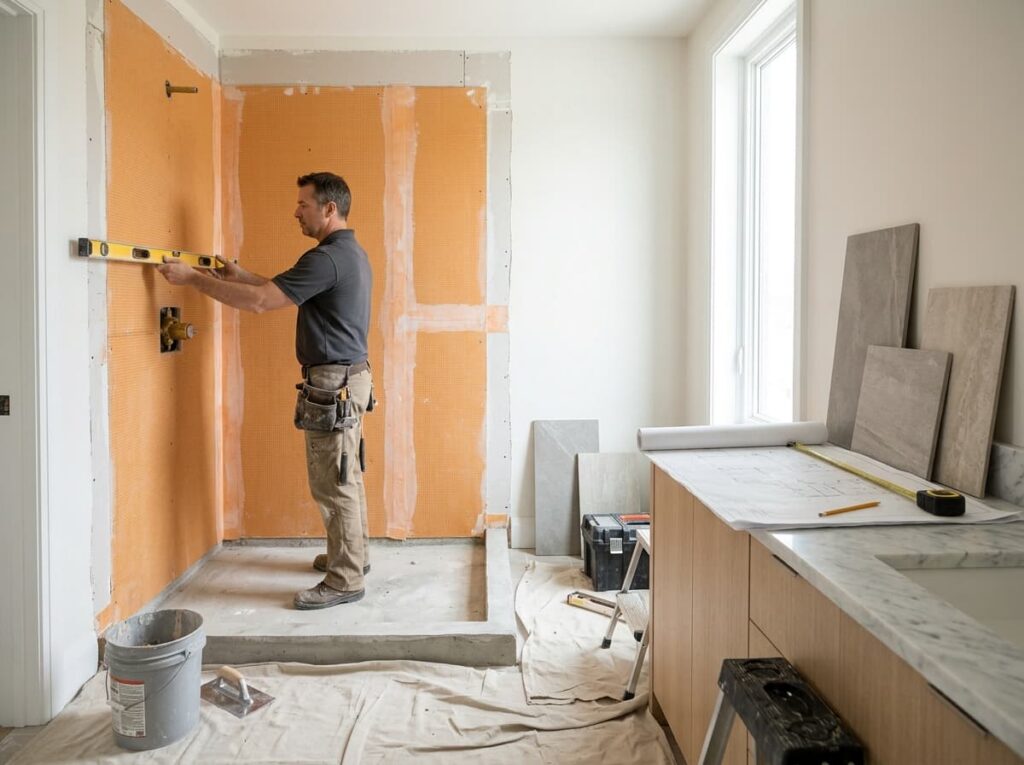
The biggest mistakes to avoid in a bathroom renovation are skipping a written budget, ignoring ventilation, cutting corners on waterproofing, moving plumbing without a plan, and choosing trends over lasting materials. Each mistake leads to extra costs, delays, or hidden damage that appears months after the work ends. This guide explains what to avoid in a bathroom renovation, why each error hurts, and how to prevent it. Roman Aronov and the team at Aronov Construction LLC see these problems on remodeling jobs often, and every one has a clear fix when you plan early.
Why a Bathroom Renovation Goes Wrong
A bathroom is the smallest room in most homes, yet it holds the most complex mix of trades. Plumbing, electrical, tile, waterproofing, ventilation, and carpentry all share a few square feet. A single mistake in one trade affects the others. A leaking shower pan ruins the subfloor. A weak fan feeds mold in the ceiling. A misplaced drain blocks the vanity you wanted.
Most failed bathroom renovation projects share the same cause: homeowners start choosing finishes before they finish planning the layout, the budget, and the schedule. A strong bathroom renovation starts with decisions about structure and systems. Finishes come last.
1. Skipping a Detailed Budget
The first mistake in any bathroom remodeling project is guessing at costs. A rough number does not cover demolition, disposal, permits, delivery fees, or the small items that add up, such as shower valves, drains, and trim.
Write a line-by-line bathroom renovation budget before you sign a contract. List labor, materials, fixtures, permits, and a contingency fund of 10 to 20 percent. Older homes often reveal rot, outdated wiring, or galvanized pipes once the walls open, and the contingency pays for those surprises.
Avoid choosing the lowest bid without comparing scope. A low price often leaves out waterproofing, ventilation upgrades, or cleanup. Ask each contractor to itemize the same work so you can compare real numbers.
2. Ignoring the Layout and Plumbing Locations
Moving a toilet, shower, or sink changes the cost of a bathroom renovation more than any finish does. Drain lines need the correct slope, and vent lines need proper routing. Relocating them can mean cutting into floor joists or opening a ceiling below.
When the budget for your bathroom renovation is tight, keep fixtures near their current drains. Spend the savings on better materials. If you want a new layout, ask your contractor to check the joist direction, the drain size, and the clearances before you commit. Building codes for a bathroom renovation require specific distances around toilets and in front of vanities, so a layout that looks good on paper may fail inspection.
3. Underestimating Ventilation
Poor ventilation is one of the most common bathroom renovation mistakes. Steam and humidity soak into drywall, paint, and wood. Without a strong exhaust fan, mold grows behind the walls where you cannot see it.
Choose a fan rated for your room size. A general guideline calls for one cubic foot per minute (CFM) for each square foot of floor area, with a minimum of 50 CFM. Vent the fan to the exterior, never into the attic. Install a humidity-sensing switch or a timer so the fan runs for 20 minutes after you shower.
Pick a quiet fan as well. People turn off loud fans, and a fan that stays off does not protect your bathroom remodel.
4. Cutting Corners on Waterproofing
Tile and grout do not stop water. Water passes through grout lines and cracks over time. The waterproofing layer behind the tile protects the structure, and it deserves the most attention in any bathroom renovation.
For every bathroom renovation, use a proven system, such as a sheet membrane or a liquid-applied membrane, across the entire shower, including the curb, niche, and bench. Test the shower pan with a flood test before tiling. Seal every corner and penetration around valves and shower heads.
Avoid green drywall as a shower backer. Cement board or a foam backer board performs far better in wet areas. A failed membrane forces you to tear out the tile, so do this step right the first time.
5. Choosing Slippery or Hard-to-Clean Surfaces
Smooth, glossy floor tile looks elegant in a showroom and turns dangerous when wet. Choose tile with a slip-resistance rating suited for a bathroom renovation, and look for a textured or matte finish. Small mosaic tile on a shower floor gives extra grip because the many grout lines add traction.
Think about cleaning during your bathroom renovation, too. Natural stone such as marble needs sealing and careful products. Large-format porcelain tile has fewer grout lines and wipes clean quickly. For a family bathroom renovation, durable and low-maintenance surfaces save time for years.
6. Forgetting Storage
Many homeowners focus on the shower and the vanity and forget where the towels, cleaning supplies, and daily products will live. Clutter makes even a beautiful bathroom remodel feel small.
Plan storage for your bathroom renovation before the walls close. Recessed medicine cabinets, shower niches, vanity drawers, and a linen tower all fit into tight footprints. Drawers beat doors under the sink because they let you see everything at once. Add blocking inside the walls now if you may want grab bars or floating shelves later, since wood backing is easy to add before drywall and costly afterward.
7. Poor Lighting Choices
A single ceiling fixture casts shadows across your face and makes grooming difficult. Layer the lighting in your bathroom renovation instead. Combine overhead light, task light at the mirror, and a dimmable accent light for evenings.
Place vanity lights at both sides of the mirror, or use a long fixture above it, so light falls evenly. Choose bulbs with a color temperature near 2700 to 3000 Kelvin and a high color rendering index. Use only fixtures rated for damp or wet locations inside the shower. Good lighting changes how every finish looks, so make it part of the early plan for your bathroom renovation.
8. Choosing Style Over Substance
Fixtures and finishes matter in a bathroom renovation, but the quality of the parts behind the wall matters more. A stylish faucet with weak internal parts drips within a year. A cheap toilet clogs and wastes water.
For a lasting bathroom renovation, buy fixtures from established brands with available replacement parts. Check warranties on faucets, valves, and vanities. Spend money where you touch and use the room daily: the shower valve, the toilet, the faucet, and the hardware. Save on decorative items that you can replace easily, such as mirrors, towel bars, and paint.
9. Following Trends That Age Quickly
Bold colors, heavily patterned tile, and novelty fixtures date a room quickly. If you plan to sell within a few years, a neutral base appeals to more buyers. Use trends in the parts of your bathroom renovation that are easy to change, such as paint, accessories, and lighting.
Browse bathroom remodel ideas for inspiration, then ask whether you will still enjoy each choice in ten years. Classic white or warm neutral tile, simple cabinets, and quality metal finishes keep their value. Our guide on outdated bathroom trends covers the styles to skip in more detail.
10. Skipping Permits and Hiring the Wrong Contractor
Many homeowners skip permits to save time. Unpermitted work can cause problems during a sale, an insurance claim, or an inspection. Most jurisdictions require permits for plumbing, electrical, and structural changes in a bathroom renovation. A licensed contractor handles this paperwork and schedules inspections for you.
Hire a bathroom renovation contractor who is licensed, insured, and willing to share references and recent projects. Ask for a written contract that covers scope, price, payment schedule, timeline, and warranty. Avoid anyone who asks for a large deposit up front or pressures you to sign the same day.
Mistakes Homeowners Make Before the Bathroom Renovation Starts
Some of the costliest errors happen before demolition. Homeowners order a vanity, tile, or a freestanding tub before the contractor confirms the layout. The tub arrives and does not fit the floor framing, or the vanity blocks the door swing. Returns, restocking fees, and delays follow.
Wait to order large items until your contractor measures the room and reviews the plans. Confirm lead times too. Custom vanities and specialty tile can take six to twelve weeks, and a bathroom renovation stalls when one missing item holds up the next trade.
Another early mistake is skipping a plan for the temporary bathroom. A bathroom renovation shuts off the room for weeks. Plan a second bathroom, set expectations with your household, and agree on a daily schedule with the crew.
Warning Signs Your Bathroom Renovation Needs a Professional
Small cosmetic updates suit careful do-it-yourself work. A full bathroom renovation carries more risk. Call a licensed contractor when you see any of these signs:
- Soft spots in the floor near the tub or toilet
- Musty smells or black spots on the ceiling
- Cracked grout that keeps returning after repairs
- Low water pressure or slow drains
- Outdated wiring or ungrounded outlets near water
Each sign points to a hidden problem that a new coat of paint or fresh tile will not fix. Address the cause first, and your bathroom renovation will last longer.
How to Plan a Bathroom Renovation Without Regret
Follow a simple order and you will avoid most bathroom renovation problems:
- Define your goals, such as better storage, a larger shower, or resale value.
- Set a budget with a contingency.
- Finalize the layout with your contractor before ordering anything.
- Choose waterproofing, ventilation, and lighting first.
- Select tile, fixtures, and finishes last.
- Order materials early so delays do not stall the schedule.
This order keeps your bathroom renovation on budget and prevents rework.
Work With a Team That Plans Ahead
A well-run bathroom renovation looks simple from the outside because the planning happened before the first tile went down. Aronov Construction LLC helps homeowners plan layouts, set clear budgets, and build with proven waterproofing and ventilation methods. If you want a straight answer on scope and cost, contact the team through aronovconstruction.com and request a consultation.
Frequently Asked Questions About Bathroom Renovation
What should you avoid when renovating a bathroom?
Avoid skipping a budget, weak waterproofing, poor ventilation, slippery tile, too little storage, and unpermitted work. Also avoid moving plumbing without checking the cost first.
What is the biggest mistake in a bathroom renovation?
Poor waterproofing causes the most expensive damage. Water that escapes behind tile rots framing and grows mold, and fixing it means tearing out the finished work.
How much should I set aside for surprises during a bathroom renovation?
Set aside 10 to 20 percent of your budget. Older homes sit at the higher end because hidden rot, old wiring, and outdated pipes appear after demolition.
Does moving the toilet or shower increase the cost of a bathroom remodel?
Yes. Relocating drains and vents requires cutting into floors or ceilings. Keeping fixtures in their current positions saves labor and keeps the project simpler.
What size exhaust fan does a bathroom need?
A common guideline is one CFM per square foot of floor area, with a 50 CFM minimum. Vent it outdoors and use a timer or humidity sensor.
What type of tile is best for a bathroom floor?
Porcelain tile with a slip-resistant finish works best. It resists water, cleans easily, and lasts for decades. Small mosaic tiles add grip on shower floors.
Do I need a permit for bathroom remodeling?
Most areas require permits for plumbing, electrical, and structural changes. Cosmetic updates such as paint often do not. Check with your local building department or ask your contractor.
How long does a bathroom renovation take?
A standard bathroom renovation takes two to four weeks once materials arrive. Layout changes, custom tile work, and permit delays extend the schedule.
Should I choose trendy materials for a bathroom renovation?
Use trends in easy-to-change items such as paint, lighting, and accessories. Choose timeless tile, cabinetry, and fixtures for the main surfaces so the room stays current longer.
How do I choose a bathroom renovation contractor?
Check the license and insurance, read reviews, and ask for references and photos of similar projects. Request an itemized written estimate and compare scope, not only price.