
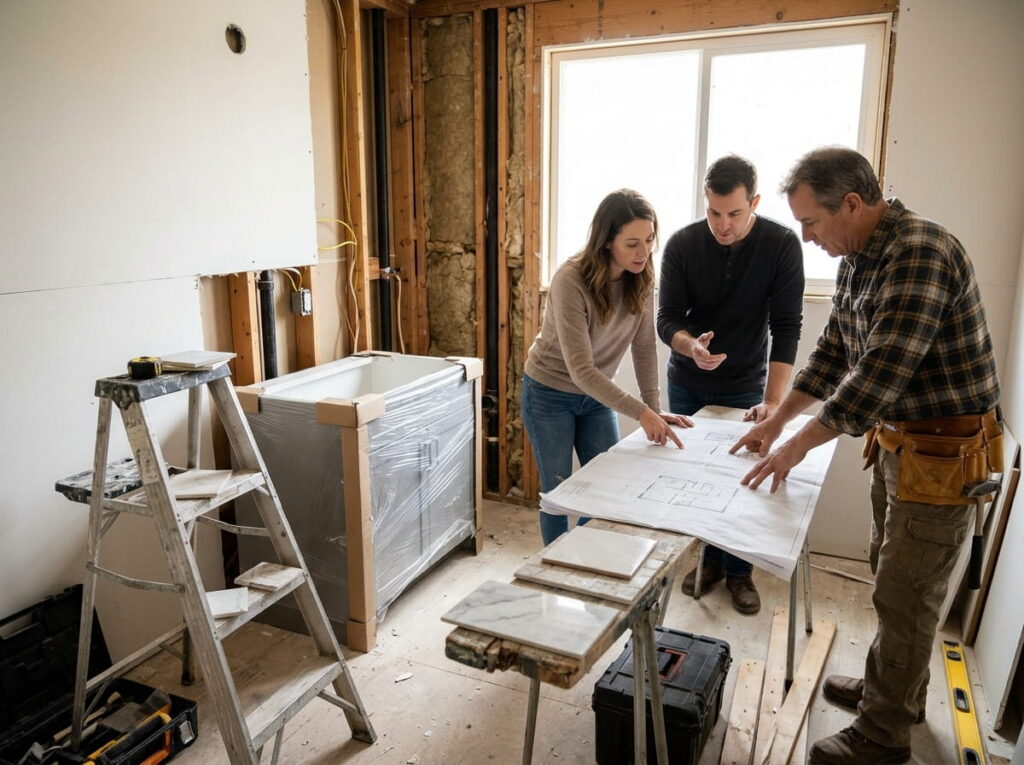
Most homeowners wish they knew five things before a bathroom remodel: it takes longer than expected, hidden damage raises the cost, product lead times control the schedule, waterproofing matters more than tile, and early decisions save money later. This guide shares twelve lessons that Aronov Construction LLC hears from clients after a bathroom remodel ends. Use them to plan your own project, set a realistic budget, and avoid the regrets that come from rushed choices.
Lesson 1: A Bathroom Remodel Takes Longer Than You Think
A small room does not mean a short bathroom remodel. A typical bathroom remodel takes two to six weeks of active work, and the schedule often stretches because trades must work in order. Demolition comes first, followed by plumbing and electrical rough-in, inspections, waterproofing, tile, fixtures, and paint. Each step needs the one before it to finish.
Delays usually come from materials, not crews. A custom vanity or special tile can take weeks to arrive. Ask your contractor for a written timeline, and order materials before demolition starts. A bathroom remodel runs smoothly when everything is on site before the walls open.
Lesson 2: The Budget Needs a Cushion
Almost every homeowner says the same thing after a bathroom remodel: the final cost was higher than the first estimate. The cause is rarely poor work. It is usually surprises behind the walls, upgrades chosen mid-project, or small items nobody priced.
Add a contingency of 10 to 20 percent to your budget on day one. Older homes need the higher number. If the surprises never appear, you keep the money. If they do, you can pay for them without stopping the bathroom remodel or settling for a weaker repair.
Lesson 3: Demolition Reveals Hidden Problems
Walls and floors hide the real condition of a bathroom, so every bathroom remodel carries some risk. Once demolition starts, crews often find water damage around the tub, rotted subfloor near the toilet, old galvanized pipes, or wiring that no longer meets code.
These discoveries are not a sign of a bad contractor. They are a normal part of older homes. Good bathroom renovation contractors explain what they find, show you photos, and give a written change order before they continue. Keep photos of the open walls, because they document the condition of your home and help with future repairs. Never approve extra work verbally. A written change order protects both sides and keeps the bathroom remodel transparent.
Lesson 4: Plumbing Layout Drives the Price
Homeowners often expect the tile or the vanity to be the largest cost in a bathroom remodel. In many projects, the plumbing layout decides the budget. Moving a toilet, shower, or tub means new drain lines, new vents, and sometimes cutting into floor framing.
Ask your contractor what a layout change adds before you fall in love with a design. Keeping the main fixtures in their current locations frees money for finishes you will notice every day. When a new layout truly improves the room, such as swapping a tub for a larger shower, the extra cost can be worth it. Make that choice with real numbers, not guesses.
Lesson 5: Waterproofing Matters More Than Tile
You will see the tile every day, but the waterproofing protects your home. Tile and grout are not waterproof. Water passes through grout lines and reaches the layers behind them. Without a proper membrane, a bathroom remodel can hide a slow leak that rots framing and grows mold.
Ask your contractor to explain the waterproofing system in plain language. Confirm that it covers the full shower, the curb, the niche, and the bench. Ask about a flood test on the shower pan before tiling. These steps cost little compared with the damage a failed shower causes.
Lesson 6: Decisions Take More Time Than You Expect
A bathroom remodel involves hundreds of choices: tile size, grout color, faucet finish, valve type, shower head, vanity height, mirror, lighting, paint, and hardware. Many homeowners feel overwhelmed halfway through.
Reduce the load of your bathroom remodel by deciding in order. Start with layout and structure, then plumbing fixtures, then tile, then cabinetry, then paint and accessories. Set a deadline for each group so the project never waits on you. Visit a showroom early, take photos, and bring samples home to view in your own light. Hold each sample next to the others, because tile, paint, and countertop colors shift when they sit side by side. Daylight and artificial light change how colors look.
Lesson 7: Lead Times Control the Calendar
Supply chains vary, but lead times still decide how a bathroom remodel unfolds. Stock items may arrive in days. Special-order tile, custom glass, and made-to-order vanities can take many weeks.
Order big items first. Check each product for backorders and confirm delivery dates in writing. Inspect every box when it arrives, because finding a cracked vanity top or the wrong tile color in the middle of a bathroom remodel wastes time. Store materials in a dry, safe place away from the work area.
Lesson 8: Ventilation Is Not Optional
A beautiful bathroom remodel fails quickly without airflow. Moist air collects on paint, drywall, and wood, and over time it causes peeling, stains, and mold. Many older bathrooms have a weak fan or none at all.
Install a quiet exhaust fan sized for your room and vent it outdoors. Add a timer or humidity sensor so the fan runs after showers. If your home has no exhaust path, ask your contractor to plan one before the ceiling closes. This single upgrade extends the life of every other part of the bathroom remodel.
Lesson 9: Storage and Daily Habits Shape the Design
Photos show a clean counter with a single soap dispenser. Real life includes toothbrushes, hair tools, towels, and cleaning supplies. Many homeowners say they wish they had planned more storage in their bathroom remodel.
Walk through your morning routine and list what you use. Then design a home for each item. Deep drawers, a recessed medicine cabinet, a shower niche, and a linen tower all help. Place outlets inside drawers or near the mirror for hair dryers and razors. Plan for the people who use the room, including children and guests.
Lesson 10: Lighting Changes How Everything Looks
One ceiling light makes the room feel flat and creates shadows on your face. Layer overhead light, mirror light, and a soft accent light. Choose warm white bulbs around 2700 to 3000 Kelvin and fixtures rated for damp areas. Place a light above the shower, and confirm that its rating allows contact with steam and spray. Add dimmers so your bathroom remodel works for early mornings and late evenings. Good lighting is one of the cheapest upgrades in a bathroom remodel, and it makes your finishes look better.
Lesson 11: Living Without a Bathroom Is Hard
Many homeowners underestimate how disruptive a bathroom remodel feels. The room is out of use for weeks, dust spreads through the house, and noise starts early.
Plan ahead. Identify a second bathroom, protect floors along the path to the work area, and ask the crew to seal the doorway with plastic sheeting. Agree on work hours and entry points. If your home has only one bathroom, ask your contractor about phasing the work, a portable option, or a short stay elsewhere during the busiest days.
Lesson 12: Communication With Your Contractor Matters Most
The best bathroom renovation contractors communicate clearly and often. Ask who your point of contact is, how updates arrive, and how change orders work. A weekly walkthrough keeps small questions from becoming big ones.
Put everything in writing: scope, price, payment schedule, start date, completion date, and warranty. Ask to see licenses and insurance. Check reviews and recent photos of similar work. A thoughtful contractor welcomes these questions because clear expectations lead to a better bathroom remodel.
Where the Money Goes in a Bathroom Remodel
Costs vary by region, room size, and finish level, but the pattern stays the same. Labor and structural work take a large share of any bathroom remodel budget. Cabinets, tile, and fixtures follow. Permits, disposal, and small hardware items make up the rest.
Ask each contractor for an itemized estimate that separates labor, materials, and allowances. An allowance is a placeholder amount for items you have not chosen yet, such as tile or faucets. If your allowance is too low, the final bathroom remodel price rises when you pick the products you actually want. Visit a showroom before you sign so the allowances reflect real prices.
Does a Bathroom Remodel Pay Off at Resale?
A well-planned bathroom remodel improves comfort and often helps a home sell faster. Buyers notice clean lines, good lighting, fresh tile, and a bathroom that feels dry and well ventilated. They also notice cracked grout, stains, and dated fixtures.
Return on investment depends on your market and how long you stay. If you plan to sell soon, choose neutral colors, durable materials, and a layout that works for most buyers. If you plan to stay for years, invest in the features you will enjoy daily, such as a larger shower or heated floors. Either way, quality work behind the walls protects the value of your bathroom remodel.
A Simple Checklist Before You Start
- Set goals: storage, accessibility, style, or resale value
- Build a budget with a 10 to 20 percent contingency
- Choose a contractor with references and a written contract
- Confirm layout, plumbing, and waterproofing details
- Order long-lead items before demolition
- Plan a temporary bathroom for your household
- Schedule a weekly check-in with your crew
Following this checklist keeps your bathroom remodel on schedule and on budget.
Plan Your Bathroom Remodel With Aronov Construction
Every lesson above comes from real projects. A bathroom remodel rewards homeowners who plan early, ask direct questions, and choose quality where it counts. Aronov Construction LLC guides clients through layout, budget, materials, and scheduling so surprises stay small. To discuss your project, visit aronovconstruction.com and request a consultation. For more planning help, read our guide on what to avoid when renovating a bathroom.
Frequently Asked Questions About Bathroom Remodel Planning
What do I wish I knew before my bathroom remodel?
Most homeowners wish they knew that a bathroom remodel takes longer than expected, hidden damage adds cost, and waterproofing matters more than tile. Planning and a contingency budget prevent most regrets.
How long does a bathroom remodel take?
A typical bathroom remodel takes two to six weeks of active work. Material lead times, inspections, and layout changes can add more time.
How much should I budget for surprises in a bathroom remodel?
Plan on 10 to 20 percent above your estimate. Older homes with hidden rot or outdated plumbing need the higher range.
What is the most expensive part of a bathroom remodel?
Labor and plumbing changes usually cost the most. Moving fixtures, building a custom shower, and replacing a subfloor raise the total more than most finishes do.
Should I order materials before demolition?
Yes. Order tile, vanities, and fixtures early, and confirm delivery dates in writing. A remodel stalls when one missing item holds up the next trade.
Can I stay in my home during a bathroom remodel?
Yes, if you have a second bathroom. Seal the work area with plastic sheeting, agree on work hours, and plan for dust and noise.
Do I need permits for a bathroom remodel?
Most areas require permits for plumbing, electrical, and structural work. Licensed contractors usually pull permits and schedule inspections for you.
How do I choose bathroom renovation contractors?
Verify the license and insurance, read reviews, and ask for references and photos of similar projects. Compare written estimates by scope, not only price.
What upgrades add value to a bathroom remodel?
Quality waterproofing, a strong exhaust fan, durable tile, good lighting, and ample storage all improve comfort and resale appeal.
How do I avoid cost overruns in a bathroom remodel?
Set a detailed budget, finalize your design before work starts, approve all changes in writing, and keep a contingency fund for hidden problems.