
Homeowners often dream of updating their living spaces. However, the financial reality of home remodeling quickly brings those dreams into sharp focus. Before you pick out paint colors or flooring, you must understand where the bulk of your budget will go. Consequently, asking “what is the most expensive part of a home remodel?” is the smartest first step. This guide breaks down the highest costs so you can plan your project strategically.
The Kitchen Commands the Highest Price Tag
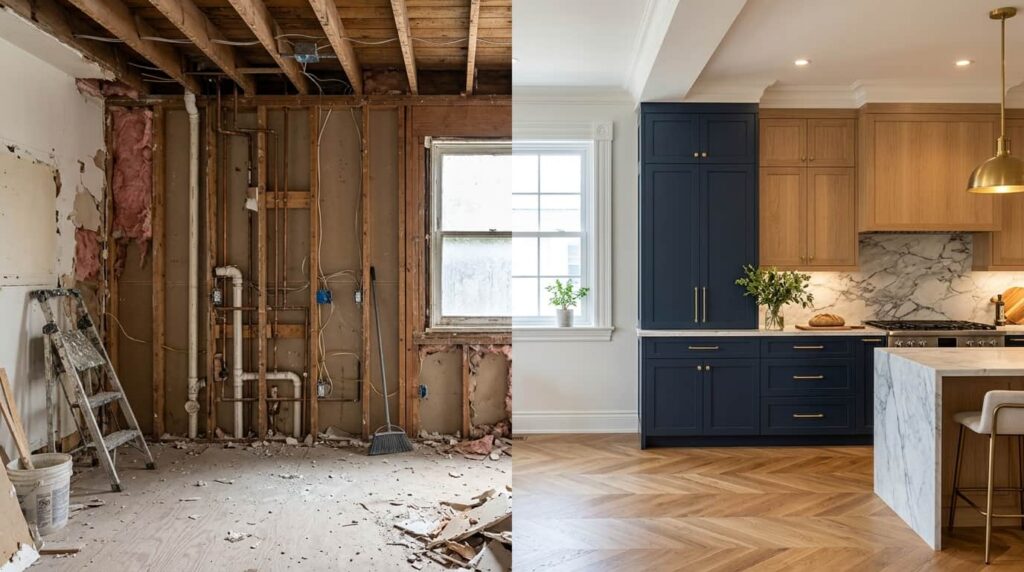
Without a doubt, the kitchen consistently represents the largest expense in any home remodeling project. Why does this single room cost so much? The answer lies in the complex systems hiding behind the walls. Therefore, you must factor in plumbing, gas lines, electrical upgrades, and ventilation. Add custom cabinetry and high-end appliances to the mix, and the numbers skyrocket.
When evaluating kitchen remodel cost, expect to spend anywhere from 20% to 30% of your total project budget on this room alone. Cabinetry alone often eats up half of the kitchen budget. Consequently, making smart choices here dictates your overall financial success. If you choose custom solid wood cabinets over stock options, your costs will surge. Meanwhile, moving the sink or stove requires expensive plumbing and gas rerouting.
Bathrooms Run a Close Second
Next on the list of expensive areas is the bathroom. The bathroom remodel cost often surprises homeowners who view this space as small. First, bathrooms require complex waterproofing systems to prevent mold and water damage. Second, the labor involved in tiling a shower or bathtub area is highly specialized. Therefore, contractors charge premium rates for this meticulous work.
Furthermore, adding new fixtures demands precise plumbing and electrical work. If you decide to relocate the toilet, expect a massive increase in your budget. Moving a toilet requires cutting into the floor joists and running new waste lines. Consequently, keeping fixtures in their current locations saves significant funds. Upgrading vanity units, tiling floors, and installing new lighting also add up rapidly.
Structural Changes and Hidden Surprises
Sometimes, the desire for an open floor plan drives the highest expenses. Removing a load-bearing wall is a major structural undertaking. First, you must hire a structural engineer to design a support beam. Next, the construction team must install temporary supports and carefully remove the old wall. Finally, you must reroute electrical wiring and HVAC ducts that run through the wall.
Furthermore, older homes often hide severe issues behind the drywall. During home remodeling, contractors frequently discover asbestos, mold, or outdated knob-and-tube wiring. Fixing these problems adds unexpected thousands to the final bill. Therefore, always maintain a contingency fund of at least 15% to 20% of your total budget for these unpleasant surprises.
Roofing, Windows, and Major Systems
While interior aesthetics dominate the conversation, exterior and mechanical upgrades carry heavy price tags. Installing a new roof ranks among the most expensive single projects for any house. Materials, labor, and the steepness of your roof all impact the final price. Additionally, upgrading to energy-efficient windows requires a substantial investment. However, these projects improve energy efficiency and protect the home.
Subsequently, replacing major systems like HVAC units or electrical panels drains budgets quickly. These hidden necessities rarely excite homeowners. Nevertheless, they are critical for safety and comfort. If your home renovation plans include moving from electric to gas heating, the infrastructure changes will prove costly. Always prioritize structural integrity and safety systems before purchasing decorative items.
How to Control Remodeling Costs
You can control these massive expenses with careful planning and strategy. First, establish a realistic budget and stick to it. Do not make changes to the design once construction begins, as mid-project changes cause delays and cost overruns. Second, prioritize function over luxury. A highly functional, mid-range kitchen beats a poorly made luxury kitchen every time.
Additionally, consider keeping the existing layout. As mentioned, moving plumbing and gas lines creates the biggest financial headaches. Finally, do not act as your own general contractor unless you possess deep industry experience. Professional project managers save you from costly mistakes. Ultimately, smart decision making ensures your home remodeling journey produces beautiful results without bankrupting your savings.
Seeking Professional Guidance
Understanding the financial landscape prevents you from becoming overwhelmed. Knowing that the kitchen and bathrooms drive the highest costs allows you to allocate funds properly. Furthermore, recognizing potential structural issues prepares you for hidden expenses. Whether you tackle a minor home renovation or a massive structural overhaul, knowledge is your best tool.
If you feel uncertain about your budget or the scope of your project, consult local professionals. Expert contractors provide accurate estimates and help you prioritize your needs. They understand how to balance aesthetics with structural requirements. Reach out to a trusted local building professional today to start planning your dream home transformation safely and affordably.
Frequently Asked Questions
- What is the most expensive part of a home remodel?
The kitchen consistently ranks as the most expensive part of home remodeling. Complex plumbing, electrical work, and costly cabinetry drive up the total price rapidly. - How much should I budget for a bathroom remodel?
Bathroom remodel cost varies widely, but you should budget between $10,000 and $25,000 for a standard full renovation. Custom features and luxury tiles significantly increase this amount. - Are structural changes expensive?
Yes. Removing a load-bearing wall requires engineers, specialized labor, and new support beams. This type of work often triggers expensive electrical and HVAC rerouting. - Why does a kitchen cost more than other rooms?
The kitchen houses complex systems like gas lines, ventilation, and water pipes. Additionally, high-quality cabinets and appliances represent major financial investments. - Can I save money by keeping my old layout?
Absolutely. Keeping sinks, toilets, and stoves in their current positions avoids expensive plumbing relocations. This strategy drastically reduces your kitchen remodel cost and bathroom remodel cost. - How much contingency fund do I need?
You should set aside 15% to 20% of your total budget for hidden problems. Old homes often hide mold, asbestos, or outdated wiring that requires immediate repair. - Do new windows add value?
Yes. Energy-efficient windows reduce utility bills and improve curb appeal. Consequently, this investment often pays for itself over time. - Should I hire a general contractor?
Yes. A general contractor manages the schedule, hires subcontractors, and ensures quality control. Their expertise prevents costly mistakes that often plague DIY projects. - What is the cheapest way to remodel a house?
Focus on cosmetic updates like painting, replacing hardware, and updating light fixtures. Avoid moving walls or changing plumbing fixtures to keep home remodeling costs low. - Can I live in my house during a major remodel?
It depends on the scope. Kitchen and bathroom renovations make daily living very difficult. If major systems or the roof undergo replacement, staying in the home is unsafe.