
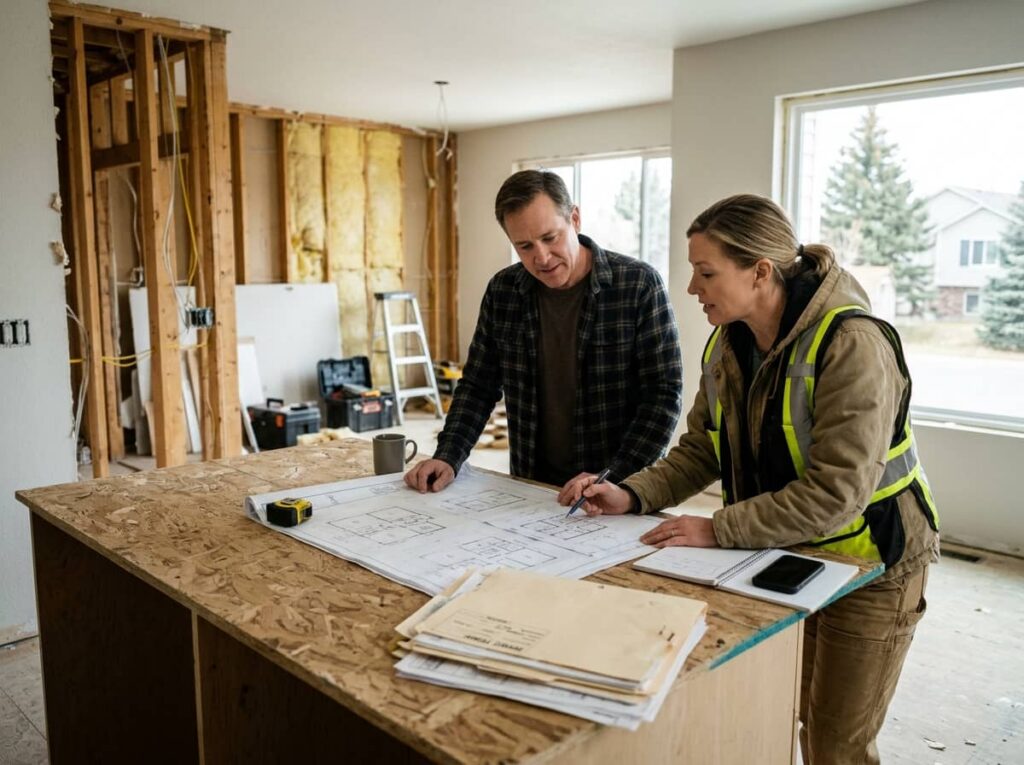
A home remodel permit Aurora CO homeowners need depends on what you change, not on how much you spend. Painting a bedroom takes no paperwork. Moving a wall, adding an outlet circuit, or relocating a sink almost always does. Many owners guess wrong, and the mistake shows up later during a sale, an insurance claim, or an inspection. This guide walks through each room of your house and explains which jobs usually trigger an Aurora building permit and which ones do not. Treat it as a planning aid, then confirm your exact scope with the City of Aurora Building Division before work starts, because codes and fees change.
Why Permits Exist
A permit is the city’s record that a qualified inspector checked your work. Inspectors look at framing, wiring, plumbing, gas lines, and ventilation because mistakes in those systems cause fires, leaks, and carbon monoxide problems. The permit protects you first. It also protects the next owner, and it gives your insurer proof that the work met code.
Think of the rule in simple terms. Cosmetic changes need no permit. Changes to structure, electrical, plumbing, gas, or mechanical systems usually do. When you ask do I need a permit to remodel a specific room, sort your project into one of those two groups first.
What Usually Needs a Permit in Any Room
Several jobs trigger an Aurora remodeling permit requirement no matter where they happen in the house:
- Removing or moving a wall, especially a load bearing wall
- Adding, moving, or upgrading electrical circuits, panels, or outlets
- Moving or adding plumbing fixtures, drains, or supply lines
- Changing gas lines or installing a new gas appliance
- Replacing or relocating a furnace, air conditioner, or water heater
- Changing the size of a window or door opening
- Adding square footage, a deck, or a finished basement
If your plan includes any item on that list, plan on a permit. Your contractor should tell you this up front and build the cost and timeline into the quote.
Kitchen Remodels
A kitchen remodel permit Aurora projects require shows up more often than owners expect. Swapping cabinets, countertops, and a faucet in the same locations usually needs no permit. The picture changes when you move the sink, add an island with outlets, install a new range hood duct, or run a gas line for a new cooktop.
Electrical work drives most kitchen permits. Modern code expects dedicated circuits for appliances, ground fault protection near water, and enough countertop outlets. If you add a dishwasher or microwave circuit, an electrical permit applies. Opening a wall between the kitchen and the dining room adds a structural review. A single remodel can therefore carry building, electrical, plumbing, and mechanical permits at once, and contractors often bundle them in one application.
Bathroom Remodels
A bathroom remodel permit Aurora inspectors will ask about depends on the plumbing and wiring. Replacing a vanity, toilet, or tub surround in the same position typically needs no permit. Relocating a toilet, moving a shower valve, converting a tub to a walk in shower with a new drain, or adding an exhaust fan duct usually does.
Water behind tile is the real risk. A bad shower pan or loose drain connection can rot framing for months before anyone notices. Inspection of the rough plumbing and waterproofing catches those problems while the walls are still open. Adding a new bathroom, such as in a basement, always requires permits for plumbing, electrical, and framing.
Bedrooms, Living Rooms, and Hallways
Most work in these rooms stays cosmetic. New paint, flooring, trim, and light fixtures in existing locations rarely need a permit. Permits come into play when you change the layout.
Creating a new bedroom closet is simple. Creating a new bedroom is not, because code requires an egress window or door large enough for emergency escape. Cutting a larger window opening also requires a permit because the framing above it carries weight. Recessed lighting is another trigger. Adding new can lights means new wiring, so an electrical permit applies. Ask your contractor to list every fixture and outlet change before you sign, because those small items add up.
Basement Finishing
Basements generate more permit questions than any other space. Finishing a basement adds framing, insulation, electrical circuits, and often a bathroom, so you should expect building, electrical, and plumbing permits. Egress rules apply to any basement bedroom. Smoke and carbon monoxide alarms must meet code in the finished area, and ceiling height must meet minimums.
Colorado also has radon concerns along the Front Range. Many contractors install a radon mitigation rough in during a basement finish. Discuss this with your builder and ask what the city expects at inspection.
Exterior Work, Windows, and Decks
Replacing windows with the same size units is often permit exempt, though local rules vary and energy code may apply. Enlarging an opening, adding a new door, or building a deck attached to the house requires a permit. Roofing, siding changes, and fences each have their own rules, and some fall under a homeowners association review as well. Check HOA covenants separately, because the city permit does not replace HOA approval.
Work That Typically Does Not Need a Permit
These jobs are generally treated as cosmetic or minor maintenance:
- Interior and exterior painting
- Replacing flooring without altering the subfloor structure
- Installing new cabinets and countertops in the same layout
- Swapping a faucet, toilet, or light fixture in place
- Replacing a door or window with the same size unit
Even here, verify before you start. A job that looks cosmetic can touch wiring or plumbing once the old material comes off.
Who Issues the Permit in Aurora
Aurora stretches across Arapahoe, Adams, and Douglas counties. For homes inside city limits, the City of Aurora Building Division issues the Aurora building permit, regardless of which county the street sits in. Homes outside city limits, in unincorporated pockets, fall under the county instead. Check your address with the city if you live near a boundary. Your property tax bill and the city’s address lookup both help confirm your jurisdiction.
How the Permit Process Works
The steps follow a predictable order. First, define your scope and gather drawings. Simple projects may need only a written description, while structural changes often need plans, and sometimes an engineer’s stamp. Second, submit the application with plans and fees. Third, the city reviews your submission and may ask for corrections. Fourth, once approved, you schedule inspections at set stages such as framing, rough electrical, rough plumbing, and final.
Most contractors handle the application for you. Confirm in writing who pulls the permit, because the name on the permit carries responsibility. Colorado licenses electricians and plumbers, and Aurora expects licensed trades for that work. Ask to see license numbers before you hire.
Can You Pull Your Own Permit
Many jurisdictions allow an owner to pull a permit for work on the home they live in. Aurora has homeowner rules, and you still must pass the same inspections. The permit does not lower the code standard. If you lack experience with wiring or plumbing, hire a licensed professional, since failed inspections cost time and money.
What Happens If You Skip the Permit
Unpermitted work creates problems that grow over time. The city can issue a stop work order and charge extra fees, and you may need to open finished walls so an inspector can see the wiring and plumbing. Insurers can deny a claim tied to unpermitted work. During a sale, a buyer’s inspector or the appraisal may flag changes that lack records, which delays closing or lowers your price. Filing a permit afterward is possible, but it usually costs more than doing it right the first time.
Practical Tips Before You Start
Call or visit the Building Division with a short written scope and ask what applies. Photograph the space before demolition. Keep copies of every permit, inspection sign off, and final approval in one folder, since you will want them when you sell. Build permit time into your schedule, because review and inspection scheduling can add weeks. Ask your contractor to separate permit fees from labor in the estimate so you can see the full cost.
Final Word
The right home remodel permit Aurora CO approach starts with a clear scope. Cosmetic changes need little paperwork, while structural, electrical, plumbing, gas, and mechanical work almost always needs approval and inspection. Review the room by room guide, list your planned changes, and confirm them with the City of Aurora Building Division. A short call before demolition saves far more than it costs.
Frequently Asked Questions
1. Do I need a permit to remodel my kitchen in Aurora, CO?
You need one if you move plumbing, add circuits, change gas lines, or alter walls. Cabinet and countertop swaps in the same layout usually do not need a permit.
2. Is a permit required to remodel a bathroom in Aurora?
A permit applies when you relocate fixtures, change drains, add a new circuit, or add a fan duct. Replacing a vanity or toilet in place generally does not.
3. Who issues building permits for homes in Aurora, Colorado?
The City of Aurora Building Division issues permits for properties inside city limits, even in parts of Aurora that sit in Adams or Douglas County.
4. Do I need a permit to remove a wall in Aurora?
Yes, in most cases. Removing a load bearing wall requires structural review, and even non bearing walls often hide wiring or ducts that need inspection.
5. Can a homeowner pull their own remodel permit in Aurora?
Owners can often pull permits for work on their own residence, and the work must still pass every inspection. Confirm current rules with the city.
6. Does finishing a basement in Aurora need a permit?
Yes. Framing, electrical, plumbing, and egress requirements all apply, so expect multiple permits and inspections.
7. Do I need a permit to replace windows in Aurora?
Same size replacements are often exempt, while enlarging an opening or adding a new one requires a permit. Check energy code requirements with the city.
8. What happens if I remodel without a permit in Aurora?
The city can issue a stop work order and fees, you may have to expose finished work for inspection, and unpermitted work can complicate insurance claims and home sales.
9. Does my contractor handle the Aurora building permit?
Most licensed contractors apply for permits as part of the job. Get that responsibility written into your contract and ask for copies of all approvals.
10. Do HOA approvals replace a city permit in Aurora?
No. The HOA and the city are separate. You may need approval from both before work begins.