
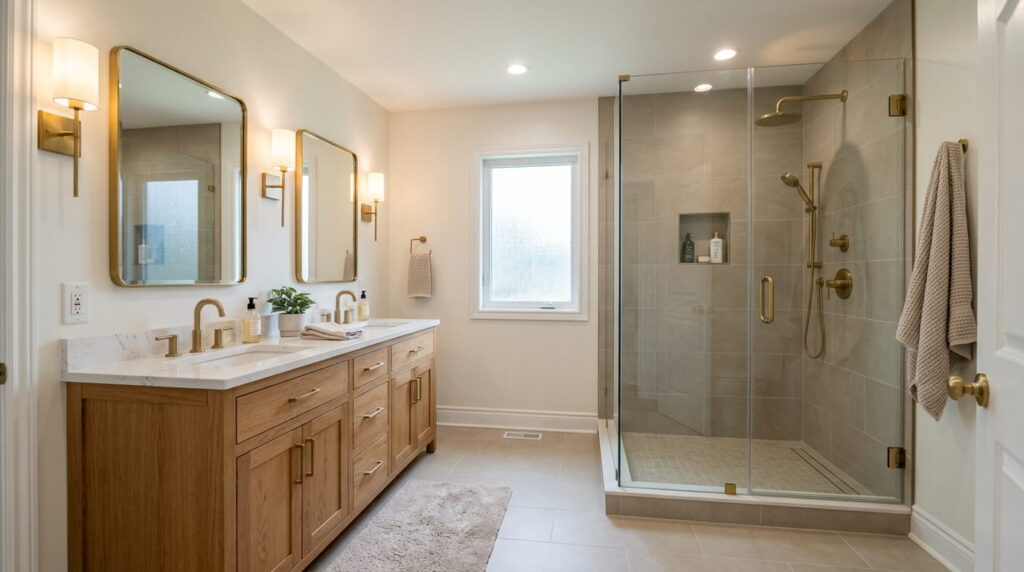
]The 30% rule in remodeling is a budgeting guideline that encourages homeowners to keep a renovation’s cost within a reasonable share of their home’s value or available budget. It is not a universal building rule or a fixed industry standard. For a bathroom renovation, homeowners can use it as an initial planning tool, then adjust the budget based on the bathroom’s condition, project goals, material choices, and labor requirements. If you are planning Bathroom Remodeling in Aurora, this guideline can help you compare upgrades, set priorities, and avoid spending more than your household can comfortably afford.
A bathroom remodel can include simple changes, such as replacing a vanity and updating fixtures, or extensive work involving plumbing, electrical systems, waterproofing, and a new shower layout. These projects have very different costs. Therefore, the 30% rule works best as a starting point rather than a final estimate. A realistic plan should account for materials, installation, permits when required, unexpected repairs, and the value each improvement brings to daily use.
How Does the 30% Remodeling Rule Work?
People use the 30% rule in different ways. Some apply it to a home’s market value, while others use it to establish a limit for a particular renovation. Because the term has no single official definition, homeowners should decide what it means for their project before using it.
For example, imagine a homeowner has a property valued at $450,000. If they use 30% of the home’s value as a broad upper limit for a major renovation, the calculation equals $135,000. However, that figure does not mean the homeowner should spend $135,000 on a bathroom. A bathroom usually represents only one part of the property, so its budget should reflect the project’s actual scope and the owner’s financial priorities.
For Bathroom Remodeling in Aurora, a more practical approach is to set a dedicated bathroom budget based on savings, financing, necessary repairs, and desired upgrades. Compare that budget with written estimates from qualified contractors. This process gives you a clearer picture of what you can complete without relying on a percentage alone.
Why Bathroom Remodeling Budgets Need Careful Planning
Bathrooms contain several connected systems in a relatively small space. Plumbing, electrical components, ventilation, waterproofing, flooring, and cabinetry must work together. A design decision in one area can affect the cost of another. Moving a toilet, for example, may require more plumbing work than replacing it in its current location.
Homeowners sometimes underestimate these connected costs because they focus on visible finishes. A beautiful tile selection may improve the room’s appearance, but proper waterproofing and installation help protect the structure underneath. Similarly, a stylish vanity may require adjustments to plumbing connections or wall fixtures.
Before beginning Bathroom Remodeling in Aurora, separate your budget into three categories:
- Essential work: Repairs, plumbing concerns, electrical safety, ventilation, and waterproofing.
- Functional upgrades: Storage, lighting, accessibility, improved shower design, and better fixtures.
- Cosmetic improvements: Paint, decorative hardware, mirrors, and selected finishes.
This order helps you protect the bathroom’s function before spending on appearance. It also makes it easier to postpone optional upgrades if estimates exceed your budget.
How Much Should You Budget for a Bathroom Remodel?
Bathroom remodeling costs vary widely. A small cosmetic refresh may cost far less than a full renovation that changes the layout or replaces major systems. Room size matters, but it does not determine the price by itself. Material quality, labor rates, demolition needs, hidden damage, and the complexity of the installation all affect the final cost.
A simple update might involve paint, lighting, a mirror, and cabinet hardware. A mid-range project could include a new vanity, flooring, toilet, shower fixtures, and professionally installed finishes. A major renovation may require custom tile, a new shower enclosure, layout changes, upgraded plumbing, or repairs behind walls.
When budgeting for Bathroom Remodeling in Aurora, request an itemized estimate instead of relying only on a broad price range. The estimate should identify labor, materials, demolition, disposal, installation, and any known permit costs. Ask the contractor to explain which items remain allowances and which have fixed prices. An allowance is an estimated amount for a selection that you have not finalized, such as tile or a vanity.
An itemized estimate helps you compare proposals fairly and identify areas where you can reduce costs without compromising essential work.
Should You Spend 30% of Your Home’s Value on a Bathroom?
Usually, homeowners should not treat 30% of their home’s value as a recommended bathroom budget. That approach can lead to unnecessary spending, especially when the bathroom needs only a few improvements. A percentage-based guideline cannot account for household income, outstanding debt, future plans, or the home’s specific condition.
Instead, consider how long you expect to remain in the property and how the bathroom serves your household. If you plan to stay for many years, comfort, storage, easier cleaning, and accessibility may matter more than short-term resale appeal. If you expect to sell soon, focus on repairs, broad buyer appeal, and a consistent finish quality that suits the property.
The right investment for Bathroom Remodeling in Aurora should fit the home’s overall condition. A high-end bathroom may feel out of place in a property that needs other major repairs. Likewise, choosing the cheapest materials can create future maintenance costs. A balanced budget prioritizes durable construction, practical design, and finishes that suit the house.
Which Bathroom Upgrades Deserve Priority?
Start with problems that could cause damage or affect safety. Leaks, poor ventilation, damaged subfloors, faulty wiring, and failed shower waterproofing deserve attention before decorative changes. Delaying these repairs may allow a small problem to become a more expensive one.
Next, focus on improvements that make the bathroom easier to use. A well-planned vanity can improve storage. Better lighting can make grooming easier. A properly designed shower can improve access and simplify cleaning. An effective exhaust fan helps control moisture, although the installation must suit the room and vent appropriately.
Finally, select finishes that fit your budget. Porcelain tile, quality faucets, durable countertops, and practical cabinetry can support long-term use. You do not need to choose the most expensive products in every category. A contractor experienced in Bathroom Remodeling in Aurora can help you identify where a higher-quality product offers a real benefit and where a standard option may work well.
How Can You Avoid Unexpected Remodeling Costs?
Unexpected expenses often come from concealed conditions. Once contractors remove old flooring, tile, or wall coverings, they may discover water damage, deteriorated materials, outdated plumbing, or other issues. A visual inspection before demolition cannot always reveal these problems.
Build a contingency allowance into your budget. Many homeowners use a reserve of around 10% to 20%, depending on the age of the bathroom, the extent of demolition, and the uncertainty of the existing systems. This is a planning guideline, not a guarantee that the reserve will cover every issue.
Before work begins, agree on a process for handling additional repairs. Ask the contractor to document the issue, explain the recommended solution, and provide a price before proceeding whenever practical. Keep product selections, change orders, payment terms, and the project schedule in writing.
For Bathroom Remodeling in Aurora, also confirm who will handle permits and inspections when required. Clarifying these responsibilities early can reduce confusion and help you plan the schedule accurately.
Can You Follow the 30% Rule and Still Increase Home Value?
A budget guideline cannot guarantee a return on investment. Remodeling value depends on the property, local buyer preferences, project quality, and market conditions when you sell. A bathroom renovation may improve buyer appeal, but the amount recovered at resale can differ from the amount spent.
The strongest projects usually balance function, maintenance, and design. Buyers may appreciate clean finishes, adequate storage, effective lighting, a well-maintained shower, and a layout that feels comfortable. They may not value highly personalized features as much as the homeowner who selected them.
If resale matters, avoid making every decision around a trend. Choose a consistent design and durable materials. Repair moisture problems and make sure the finished bathroom works as intended. Professional Bathroom Remodeling in Aurora should improve the home’s daily usability as well as its appearance.
You should also consider the surrounding property. A bathroom upgrade may be less valuable if the kitchen, flooring, or major systems need significant work. Review the home as a whole before committing a large share of your available funds to one room.
How to Plan Your Bathroom Remodel Step by Step
A structured plan makes it easier to manage cost, time, and decisions.
- Define the problem. List what does not work in the current bathroom, such as poor storage, a cramped shower, leaks, or insufficient lighting.
- Set a realistic budget. Decide what you can afford and reserve funds for unexpected conditions.
- Separate essentials from optional upgrades. Address repairs and building systems first.
- Choose the project scope. Decide whether you need a cosmetic refresh, a partial renovation, or a full remodel.
- Compare written estimates. Review the same scope of work with each contractor.
- Confirm responsibilities. Clarify permits, material orders, demolition, waste disposal, and inspections.
- Finalize selections early. Choose tile, fixtures, cabinetry, and other finishes before installation begins whenever possible.
- Review changes in writing. Approve additions or substitutions only after understanding their price and schedule impact.
These steps help homeowners approach Bathroom Remodeling in Aurora with clear expectations. They also make it easier to evaluate whether a proposed upgrade supports the budget or adds unnecessary complexity.
How to Choose a Bathroom Remodeling Contractor in Aurora
A good contractor should explain the work clearly and provide a written scope. Ask about relevant bathroom renovation experience, insurance, references, project supervision, and the process for addressing unexpected conditions. You should also understand who will coordinate subcontractors and inspections.
Review estimates carefully. A very low quote may exclude demolition, disposal, waterproofing, finish materials, or necessary repairs. Ask each contractor to identify exclusions and allowances. This gives you a more useful comparison than looking at the total price alone.
For Bathroom Remodeling in Aurora, verify the requirements that apply to your address and proposed work. The need for permits can depend on the scope of the renovation. Ask the contractor or the appropriate local building department whether the project requires permits or inspections, especially if it involves plumbing, electrical work, structural changes, or changes to the layout.
Clear communication matters throughout the project. Before signing, make sure the agreement describes the scope, payment schedule, anticipated timeline, change-order process, and warranty terms.
Common Budgeting Mistakes to Avoid
One common mistake is choosing finishes before establishing the full project budget. Homeowners may select expensive tile, faucets, and cabinetry, then discover that labor and repairs consume more money than expected. Establish the total budget first and assign spending limits to each category.
Another mistake is assuming that a small bathroom will always cost little to renovate. Compact rooms can require detailed tile work, custom shower components, and careful coordination between fixtures. Labor and installation complexity can matter more than floor area.
Some homeowners also ignore ventilation and waterproofing because these components remain mostly hidden. However, moisture control protects the room and supports long-term durability. Cutting corners in these areas can create expensive problems later.
Finally, avoid making frequent changes after work begins. Late selections or layout changes can lead to delays, additional labor, and restocking charges. A well-planned Bathroom Remodeling in Aurora project should establish the major design decisions and material choices before construction starts.
Frequently Asked Questions
1. What is the 30% rule in remodeling?
The 30% rule is an informal budgeting guideline that some homeowners use to compare renovation spending with property value or available funds. It has no single official definition. For a bathroom project, calculate a budget based on the work required, household finances, and expected benefits rather than treating 30% as a mandatory spending target.
2. Is the 30% rule a requirement for bathroom remodeling in Aurora?
No. The 30% rule is not a building-code requirement. Local permit and inspection requirements depend on the type of work. Homeowners should verify applicable requirements with the relevant local building department.
3. How much should I spend on bathroom remodeling in Aurora?
The appropriate budget depends on the bathroom’s size, existing condition, material choices, labor, and project scope. Request itemized estimates from qualified contractors to understand the likely cost before making final decisions.
4. Should I renovate my bathroom before selling my home?
It depends on the bathroom’s condition and your selling goals. Repairs, clean finishes, functional fixtures, and good lighting may improve buyer appeal. Compare the expected cost with the property’s overall condition and local market expectations.
5. What should I fix first during a bathroom remodel?
Address active leaks, moisture damage, unsafe electrical conditions, ventilation problems, and failed waterproofing first. Then consider functional upgrades and cosmetic improvements.
6. How much extra money should I reserve for unexpected costs?
A contingency of around 10% to 20% is a common planning guideline. Older bathrooms or projects with extensive demolition may need more flexibility. Your contractor can help assess the risks before work begins.
7. Does replacing a bathtub with a shower save money?
It may or may not. The price depends on plumbing changes, waterproofing, shower materials, glass, and labor. Compare the full installation cost with the benefits you expect from the new layout.
8. Can I remodel a bathroom in stages to control costs?
Yes, if the work can be divided safely and logically. However, completing related tasks together may reduce repeated labor and demolition. Ask a contractor to compare a phased plan with a single project.
9. How do I compare bathroom remodeling estimates?
Compare the detailed scope, materials, labor, allowances, exclusions, schedule, and change-order terms. A lower total price may not represent better value if essential work is missing.
10. How do I start bathroom remodeling in Aurora?
Identify your priorities, set a budget, and decide which improvements are essential. Then consult qualified contractors, compare written proposals, and confirm any permit requirements before construction.