
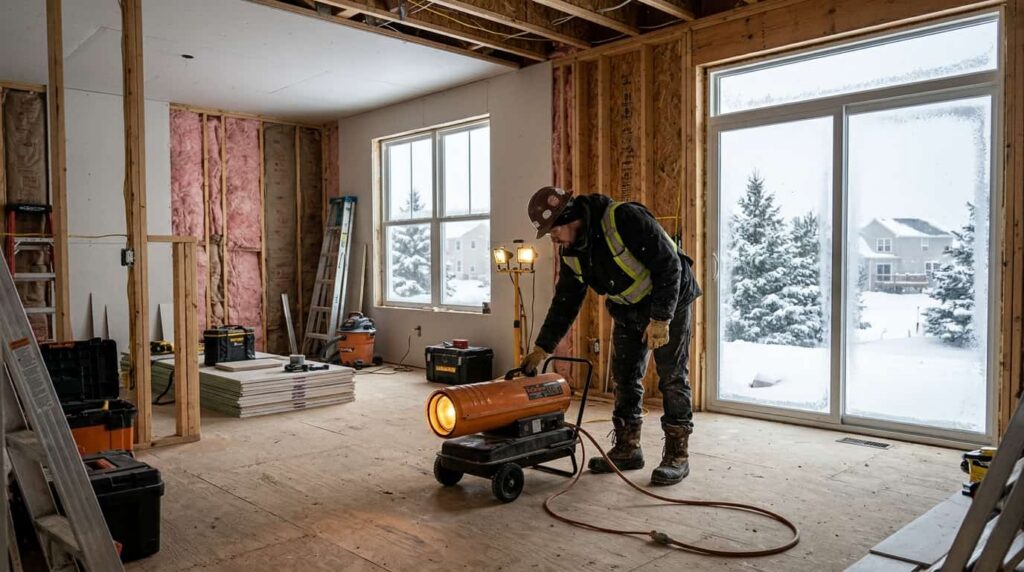
Aurora homeowners often assume that renovation work stops when the snow starts. That assumption is incorrect. While winter remodeling Colorado presents unique challenges, the season offers significant advantages for interior projects. The Front Range sees roughly 300 days of sunshine a year, and snow typically melts within a day or two at lower elevations.
This guide explains how winter remodeling Colorado actually works. It covers which projects thrive in the cold months, which ones require special techniques, and how to manage the specific constraints of a Colorado winter. Whether you plan a bathroom update or a basement finish, understanding the season’s rules ensures a successful project.
Why Winter Remodeling Colorado Works
The idea that construction stops from November through March is a myth. Modern methods and materials allow most work to continue year-round. Interior projects like kitchens, bathrooms, and basement finishing are actually ideal for winter because the work stays indoors and remains unaffected by the weather outside.
The real advantage is scheduling. December through February is the slow season for interior remodeling in the Denver metro. Contractors who book 8 to 12 weeks out in spring and summer often have open slots in January and February with just 2 to 3 weeks of lead time.
This slower pace benefits homeowners in two ways. You get faster start dates. You also get the crew’s undivided attention. A winter project that receives full focus is typically better executed than a spring project where the same crew splits time across multiple jobs.
The Critical Role of Temperature Control
While interior work continues in winter, temperature control becomes non-negotiable. Thinset mortar requires a minimum ambient temperature of 50°F during application and for at least 72 hours after installation. This is a chemistry requirement, not a suggestion.
Portland cement in thinset hydrates through a chemical reaction that slows dramatically below 50°F and essentially stops below 40°F. If the temperature drops below freezing before the mortar reaches green strength, the water inside expands and the material crumbles.
The fix is straightforward. Maintain 50°F to 70°F in the work area continuously throughout installation. Use supplemental electric space heaters in the specific room, keeping the door closed to maintain the heat zone. The same rule applies to grout. Cold grout develops a powdery surface and reduced strength.
Managing Indoor Air Quality and Ventilation
One major challenge of winter remodeling Colorado is ventilation. You cannot open windows for hours when it is freezing outside. However, construction generates dust, fumes, and moisture that must be managed.
Professional crews use aggressive dust containment. This includes heavy plastic barriers, dedicated air scrubbers, and HEPA vacuums attached directly to cutting tools. Temporary barriers isolate the work area from the rest of the home.
For moisture, the bathroom exhaust fan becomes critical. Shower steam creates localized humidity that must be exhausted. During winter, manual switches often get turned off too early, allowing moisture to condense on cold surfaces. Modern fans with humidity sensors or timers ensure adequate runtime. Running the fan for 20 to 30 minutes after a shower completely removes moisture and prevents mold growth.
Exterior Work: Roofing and Siding in Winter
While interior projects thrive, exterior work requires more planning. Winter remodeling Colorado still allows roofing and siding, but crews must adapt. Modern underlayments and cold-weather sealants allow roofing to continue. Crews hand-seal shingles when the temperature calls for it and choose dry-day weather windows.
Siding installs continue with close attention to material temperatures and fastening methods. However, cold weather affects material flexibility. Vinyl siding becomes brittle in freezing temperatures and can crack if handled roughly.
For concrete and flatwork, cold-weather practices are essential. Insulated blankets, heated enclosures, accelerators, and proper curing protection keep pours setting correctly. Without these measures, concrete fails to cure and cracks. Always confirm that your contractor uses these specific cold-weather protocols before approving exterior work.
Winter Remodeling Colorado: Project Selection
Not every project makes sense in January. Choose the right scope to maximize the season’s advantages.
Ideal winter projects: Bathroom remodels, kitchen updates, basement finishing, interior painting, flooring installation, and cabinet replacement. These projects stay entirely indoors and benefit from faster permit approvals.
Projects that require careful planning: Roof replacement, siding installation, deck building, and exterior concrete work. These projects depend on weather windows and require specific cold-weather materials.
Projects to postpone: Exterior painting (temperatures must stay above 50°F for proper adhesion) and large-scale landscaping or fencing.
A home remodeling contractor in Aurora can help you phase the project. You might complete the interior work in winter and schedule the exterior components for spring. This approach keeps the project moving without fighting the weather.
Permits and Scheduling Advantages
Winter offers a hidden benefit for winter remodeling Colorado: faster permit processing. Denver, Aurora, and most Front Range building departments see permit applications spike in spring as homeowners plan summer projects. This stretches review time to the longer end of the typical 2 to 6 week range.
Submitting plans in the fall or winter for a spring start commonly moves through review faster. Contractors also have more flexibility to negotiate labor pricing during the slow season, with savings typically ranging from 5% to 15% on labor.
Why Aronov Construction for Winter Projects
Aronov Construction LLC brings more than 20 years of residential experience to every winter remodeling Colorado project. We understand the specific chemistry of cold-weather installation, the importance of dust containment, and the permit timelines for Aurora and the Front Range.
We provide dedicated supervision, clear scopes, and fixed-price budgets. We schedule interior work during the winter months to take advantage of faster timelines and dedicated crew attention. Contact us today to plan your winter renovation.
Frequently Asked Questions
1. Can you remodel a house in winter in Aurora, CO?
Yes. Interior projects like kitchens, bathrooms, and basements work excellently during winter. The work stays indoors and remains unaffected by snow. The Front Range’s 300 days of sunshine also allow exterior work during dry windows.
2. What temperature does thinset need to cure in winter?
Thinset mortar requires a minimum ambient temperature of 50°F during application and for at least 72 hours after installation. Below 40°F, the chemical reaction in Portland cement essentially stops, leading to weak bonds and crumbling.
3. Is winter a good time to remodel a bathroom in Aurora?
Yes. Winter is the slow season for interior remodeling. Contractors have more availability, pricing is often more negotiable, and your project finishes before the spring rush begins.
4. How do you control dust during winter remodeling?
Professional crews use heavy plastic barriers, dedicated air scrubbers, and HEPA vacuums attached directly to cutting tools. This containment keeps dust out of your living spaces when windows cannot be opened.
5. Can you pour concrete in winter in Colorado?
Yes, with cold-weather practices. Contractors use insulated blankets, heated enclosures, accelerators, and proper curing protection to keep pours setting correctly. Without these measures, concrete fails.
6. Why is winter a good time for permit approvals?
Building departments see a spike in applications in spring. Submitting plans in fall or winter commonly moves through review faster, often within the shorter end of the 2 to 6 week range.
7. How long should a bathroom fan run after a shower in winter?
Run the fan for 20 to 30 minutes after a shower. During winter, manual switches get turned off too early, allowing moisture to condense on cold surfaces. Humidity sensor fans automate this process.
8. What exterior work can be done in winter in Aurora?
Roofing and siding continue with cold-weather sealants and careful weather window selection. Concrete work requires insulated blankets and heated enclosures. Exterior painting should wait for temperatures above 50°F.
9. Do contractors charge less in winter?
Labor pricing often reflects demand. Contractors with light December or January calendars are more negotiable, with savings typically ranging from 5% to 15% on labor. This leverage disappears by late February.
10. How do you keep a winter work area warm?
Use supplemental electric space heaters in the specific room, keeping the door closed to maintain the heat zone. The home’s main heating system must also run adequately. A small space heater running for three days costs only a few dollars.
Final Thoughts
Winter remodeling Colorado is not only possible but often advantageous. Interior projects thrive, permits move faster, and contractors have more availability. The key is proper temperature control, dust containment, and the right project selection.
Aronov Construction LLC brings more than 20 years of experience to every home renovation in Aurora. We manage the specific demands of winter construction, from thinset chemistry to ventilation. Contact us today to schedule your winter walkthrough.