
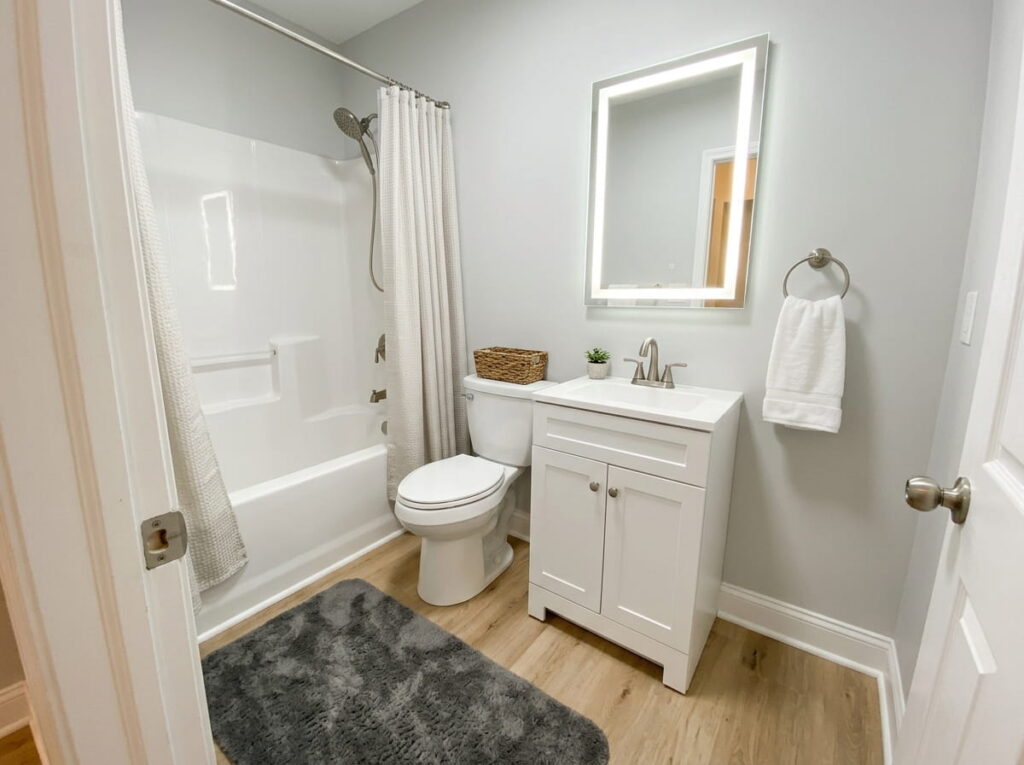
Every homeowner asks the same question before a project starts: where does the money go? The bathroom remodel cost climbs quickly because a small room holds plumbing, electrical, tile, cabinets, and waterproofing all at once. Knowing the biggest expenses helps you protect your budget and spend on the right items. At Aronov Construction LLC in Aurora, Colorado, we price bathrooms every week, and the same cost drivers appear on nearly every job. This guide ranks them from largest to smallest, explains why each one costs what it does, and shows where you can save without lowering quality. Use it to plan your bathroom renovation with real numbers.
Labor Takes the Biggest Share
Labor is the most expensive part of almost every bathroom remodel cost. Plumbers, electricians, tile setters, carpenters, and drywall finishers usually account for 20 to 35 percent of the total. A bathroom packs all of those trades into a footprint of 40 to 100 square feet, so each crew waits for the one before it. Tile work alone takes several days because waterproofing, thin-set, and grout each need cure time. Skilled bathroom remodeling labor also costs more along the Front Range than in many other regions because licensed trades stay in high demand. Read the labor line on every quote first. A very low number often signals skipped waterproofing or an unlicensed crew.
The Shower or Tub Area Comes Next
After labor, the wet zone costs the most. A custom tile shower remodel needs a sloped pan, a waterproof membrane, a valve, a showerhead, glass, and tile. Together those parts commonly run $5,000 to $15,000. Frameless glass doors alone cost $1,200 to $3,500. A built-in niche, a bench, or a linear drain adds labor hours and raises the price further. Prefab shower kits cost far less, often $1,500 to $4,000 installed, but they limit your design choices. Decide early whether the shower is your showpiece. Money spent here pays back in daily use, so many homeowners choose to put their budget in this zone and save elsewhere.
Moving Plumbing Lines Creates the Biggest Swings
The single choice that changes a bathroom remodel cost the most is whether your fixtures stay in place. Shifting a toilet drain, moving a tub to a new wall, or relocating a vanity means opening floors and walls, rerouting pipes, and meeting current code. Expect $1,500 to $5,000 for a toilet move and more if the bathroom sits over a concrete slab. Many Aurora homes have finished basements or slab foundations, which makes drain changes slower and pricier. Our crew often finds that a layout that keeps the toilet, tub, and sink where they sit delivers 90 percent of the visual impact at a much lower price.
Cabinets, Vanity, and Countertops
Storage and surfaces make up 10 to 20 percent of a typical bathroom renovation. A stock vanity runs $400 to $1,200. A semi-custom vanity costs $1,500 to $4,000, and fully custom work starts near $4,000 and climbs fast. The countertop adds more: quartz, granite, and solid-surface tops range from $500 to $2,500 for a standard vanity. Double-sink vanities cost more to build and more to plumb. If your budget is tight, choose a quality stock vanity with a solid-wood or plywood box and spend the savings on a better faucet and shower valve. Those items affect your daily routine more than a custom cabinet door does.
Tile and Flooring
Tile and flooring usually take 10 to 15 percent of the budget. Porcelain tile costs $3 to $12 per square foot, while natural stone and designer mosaics reach $20 to $40. Labor often costs more than the tile itself, because setters charge extra for small formats, patterns, and tricky cuts. A full-height shower wall can need 80 to 120 square feet of tile. Heated floors add $800 to $2,500 and make a real difference during Colorado winters. Large-format porcelain with fewer grout lines cuts labor time and cleans easier, so it works well for many homeowners who want style without the highest price.
Hidden Problems Behind the Walls
Some of the most expensive surprises stay invisible until demolition. Old leaks rot subfloors and framing. Galvanized pipes restrict flow and fail. Homes built before 1978 may contain lead paint, which requires safe handling and disposal. Outdated wiring may need new circuits to meet current code for outlets and fans. These repairs can add $2,000 to $10,000 to a bathroom remodel cost, depending on how much damage the crew finds. A written contingency of 10 to 15 percent keeps the project moving when a wall reveals a problem. Ask your contractor how they price unforeseen conditions before you sign.
A Typical Cost Breakdown
Use this split as a starting point for your bathroom remodel cost planning:
- Labor: 20 to 35 percent
- Cabinets and vanity: 10 to 20 percent
- Shower, tub, and fixtures: 10 to 20 percent
- Tile and flooring: 10 to 15 percent
- Rough plumbing and electrical: 5 to 10 percent
- Demolition, permits, and disposal: 3 to 8 percent
- Contingency fund: 10 to 15 percent
Your numbers will shift based on layout, size, and finish level. A site visit turns these percentages into a real estimate.
Where You Can Save Money
You can lower a bathroom renovation budget without cutting corners on the work behind the walls. Try these steps:
- Keep the layout. Reusing plumbing locations saves thousands.
- Choose standard sizes. Stock vanities and tubs cost less than custom pieces.
- Pick porcelain over stone. It handles moisture well and costs less.
- Limit accent tile. Use a decorative band instead of a full feature wall.
- Buy fixtures in one finish. Matching sets often cost less than mixed pieces.
Never cut waterproofing, ventilation, or licensed labor. Those items protect the entire room, and fixing them later costs far more than doing them right once.
Build Your Budget With Aronov Construction
Labor, the shower area, and plumbing changes drive the largest share of any bathroom remodel cost. Cabinets, tile, and hidden repairs follow close behind. Set a clear budget, protect it with a contingency fund, and choose a contractor who itemizes every line.
Aronov Construction LLC serves homeowners across Aurora, Colorado. Contact us for a free consultation and a detailed written estimate for your bathroom remodeling project.
Frequently Asked Questions
1. What is the most expensive part of redoing a bathroom?
Labor costs the most, usually 20 to 35 percent of the budget. The shower or tub area ranks second, and moving plumbing lines adds the largest single jump to the bathroom remodel cost.
2. How much does a bathroom remodel cost in Aurora, Colorado?
Most full bathroom projects in Aurora run $20,000 to $45,000. Small baths and powder rooms cost less, and primary suites with high-end finishes cost more.
3. Is a shower remodel more expensive than a tub replacement?
A custom tile shower remodel often costs $5,000 to $15,000. A standard tub swap costs less, but a prefab shower kit can match that price.
4. Does moving the toilet raise the cost?
Yes. Relocating a toilet usually adds $1,500 to $5,000 because crews must reroute drain lines and repair the floor.
5. How much should I set aside for surprises?
Keep 10 to 15 percent of your budget in reserve. Rot, old wiring, and failing pipes appear often in older homes.
6. Which finishes cost the most?
Natural stone tile, custom cabinets, frameless glass, and freestanding tubs raise the price the most. Porcelain and stock cabinets save money.
7. Do permits add to the bathroom remodeling cost?
Yes. The City of Aurora requires permits for most plumbing and electrical work. Fees vary by scope, and your contractor can pull them for you.
8. How long does a bathroom renovation take?
Most full projects take three to six weeks after demolition begins. Special-order materials and hidden repairs can extend that timeline.
9. Can I save money by doing some work myself?
Yes. Painting, hardware swaps, and demolition prep can cut costs. Leave plumbing, electrical, and waterproofing to licensed professionals.
10. How do I get an accurate bathroom remodel quote?
Request itemized written bids from licensed, insured contractors after an in-person walkthrough. Compare labor, materials, and allowances line by line.